The Home Baker’s Sourdough Handbook
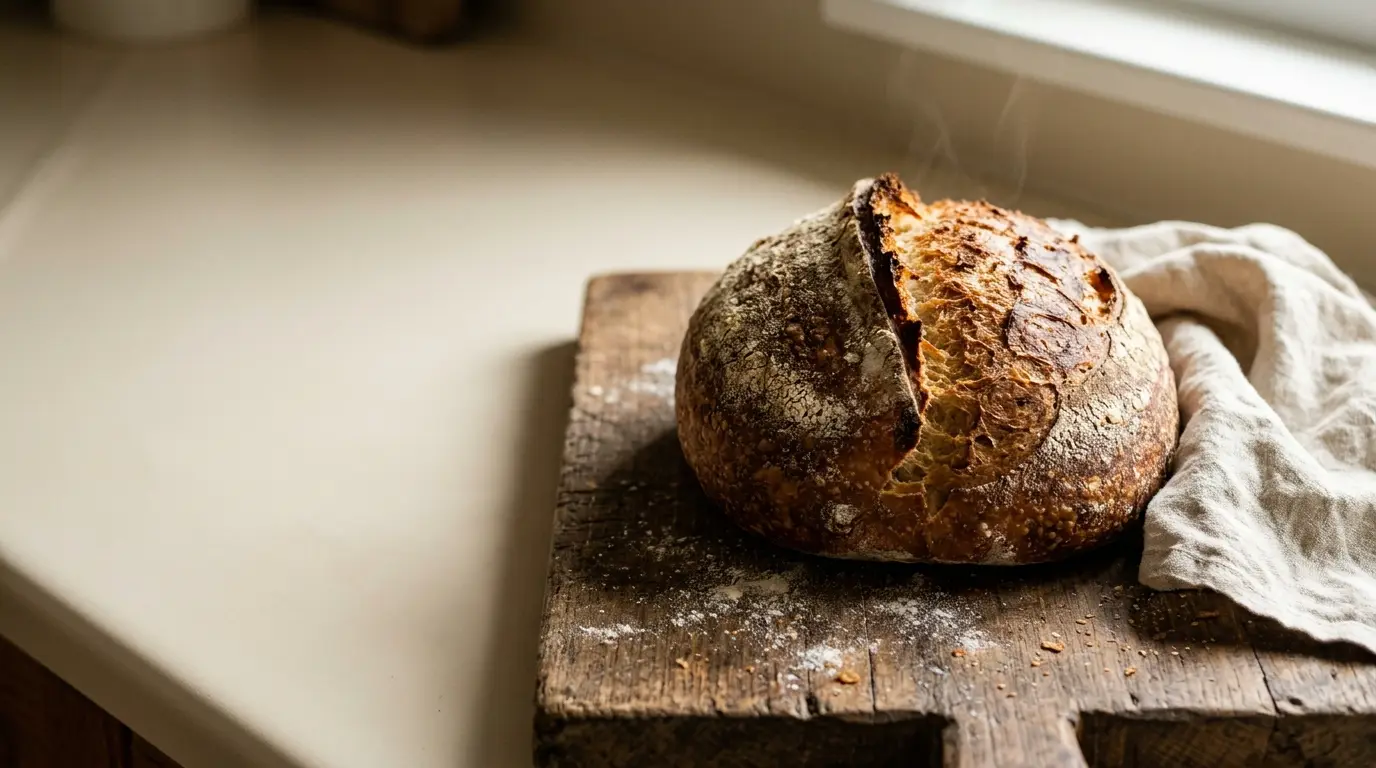
A freshly baked sourdough loaf on a wooden board, with a linen cloth beside it
PDF guide + online calculator

Learn to bake sourdough bread at home, from starter to first loaf.

A step-by-step guide in plain language, in the right order. You start with the starter and finish with your first baked loaf. And you’ll know what to do when something comes out different than expected.

$9.90 Includes, free of charge,
a baking-math
calculator
I want to learn to bake my bread

7-day guarantee · Instant download

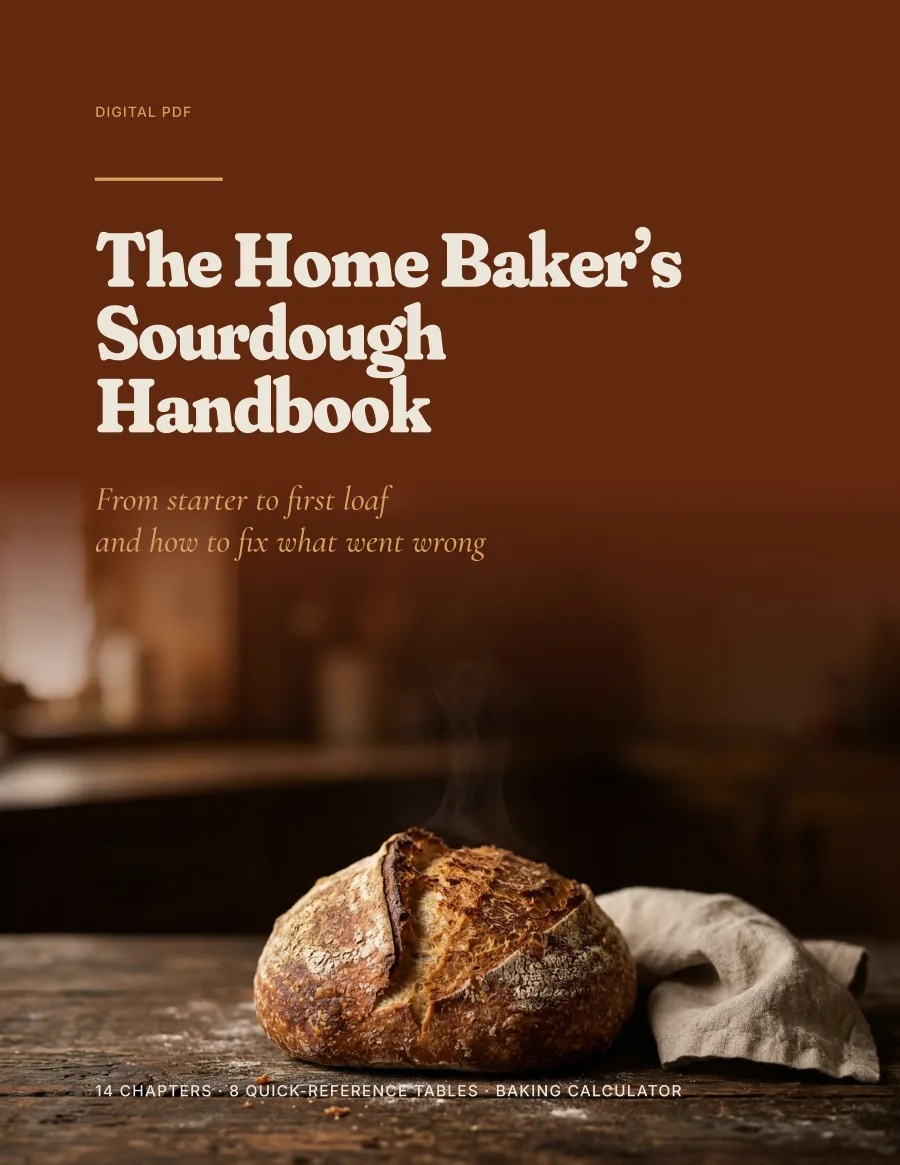
Cover of The Home Baker’s Sourdough Handbook: a sourdough loaf on a wooden table
  • 14chapters
  • 4troubleshooting tables
  • 8quick-reference tables
  • 9calculator tools
  • PDFinstant download
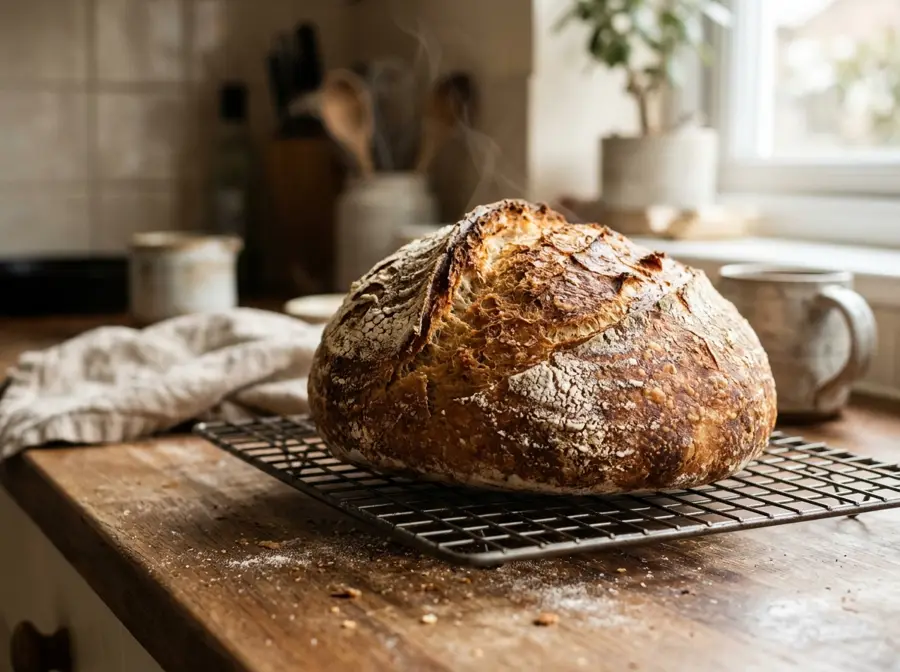
A sourdough loaf cooling on a wire rack

Why it feels so hard

Sourdough bread seems hard. It doesn’t have to be.

Most recipes only tell you what to do and give you times: “let it ferment for 4 hours.” But dough doesn’t watch the clock. It follows the temperature of your kitchen. That’s why the same recipe works for one person and fails for another.

It wasn’t your fault.

Nobody explained the why behind each step. This guide does. You learn in the order you’ll need it.

You will learn to

  • Create your own starter from scratch and know when it’s ready.
  • Mix, ferment, shape and bake, understanding what each step does for the bread.
  • Recognize the right point of the dough by temperature and appearance.
  • Bake your first loaf, with the complete recipe in Chapter 14.
  • Find the reason behind each mistake and fix it on the next bake.

The path

From starter to loaf, in the right order.

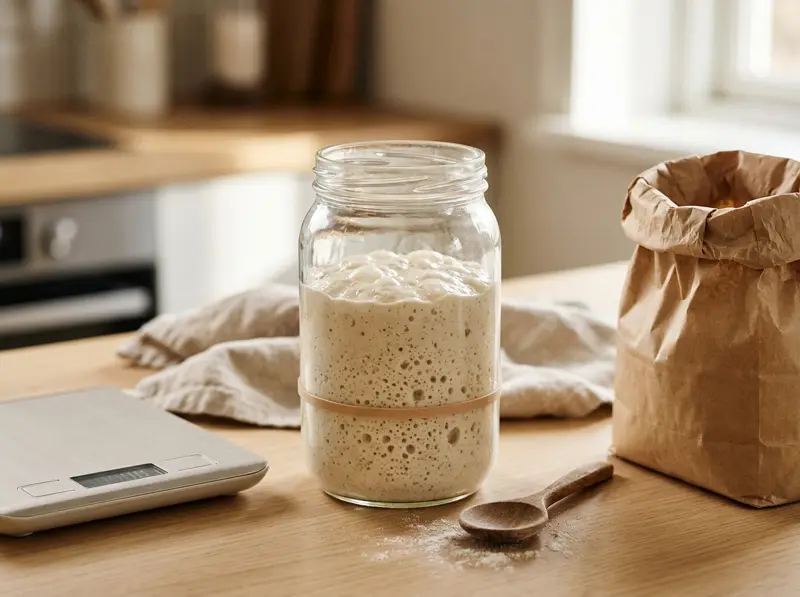
Glass jar with sourdough starter
Step 1Create your starter

From day 1 to its peak, knowing when it’s ready to bake.
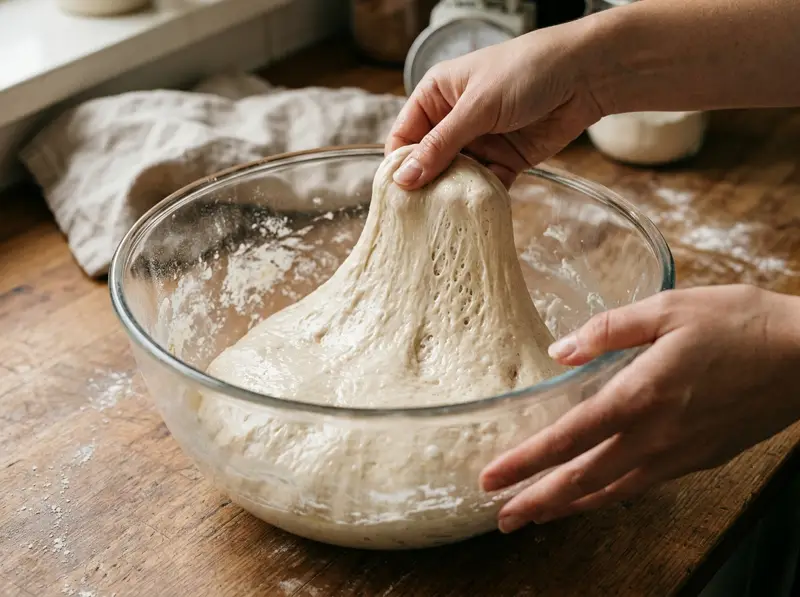
Hands folding the dough
Step 2Mix and ferment

Read the dough by temperature and look, not by the clock.
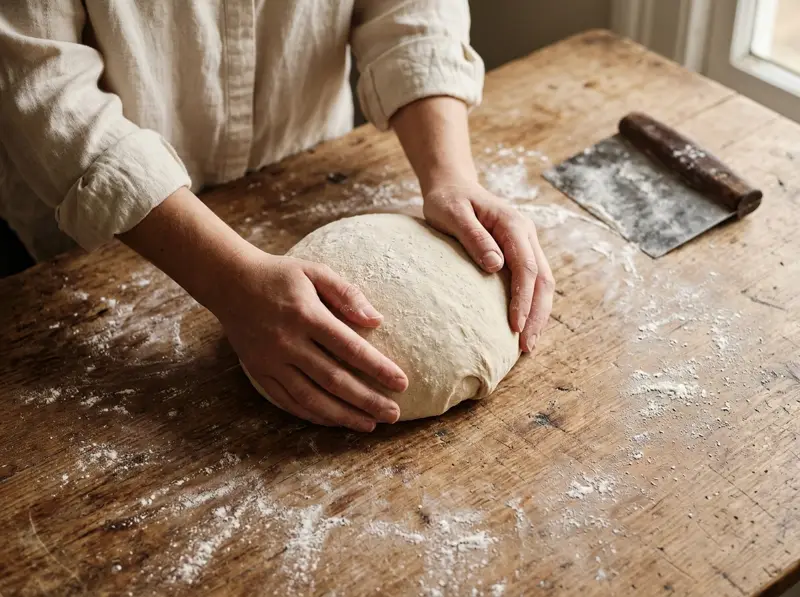
Hands shaping the dough into a loaf
Step 3Shape

Give the loaf its shape and prepare the final proof.
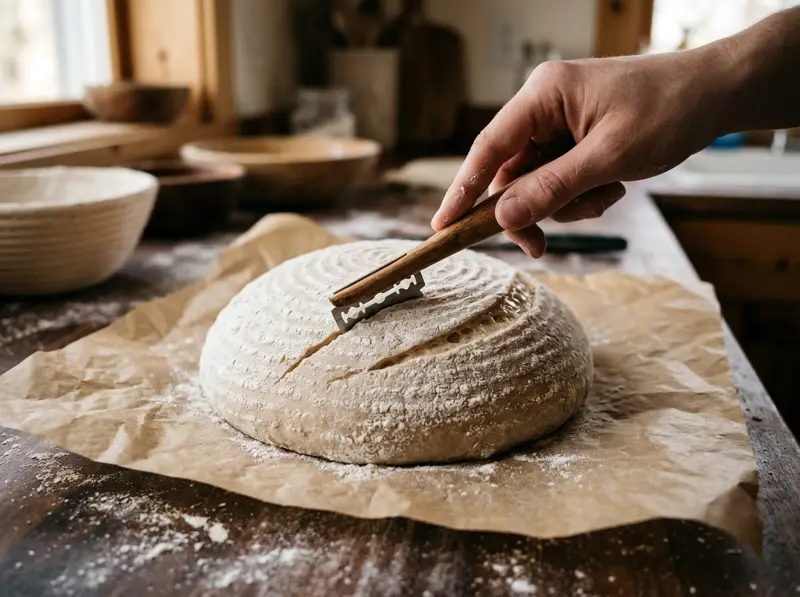
A blade scoring the dough
Step 4Score

The cut that lets the loaf open the right way in the oven.
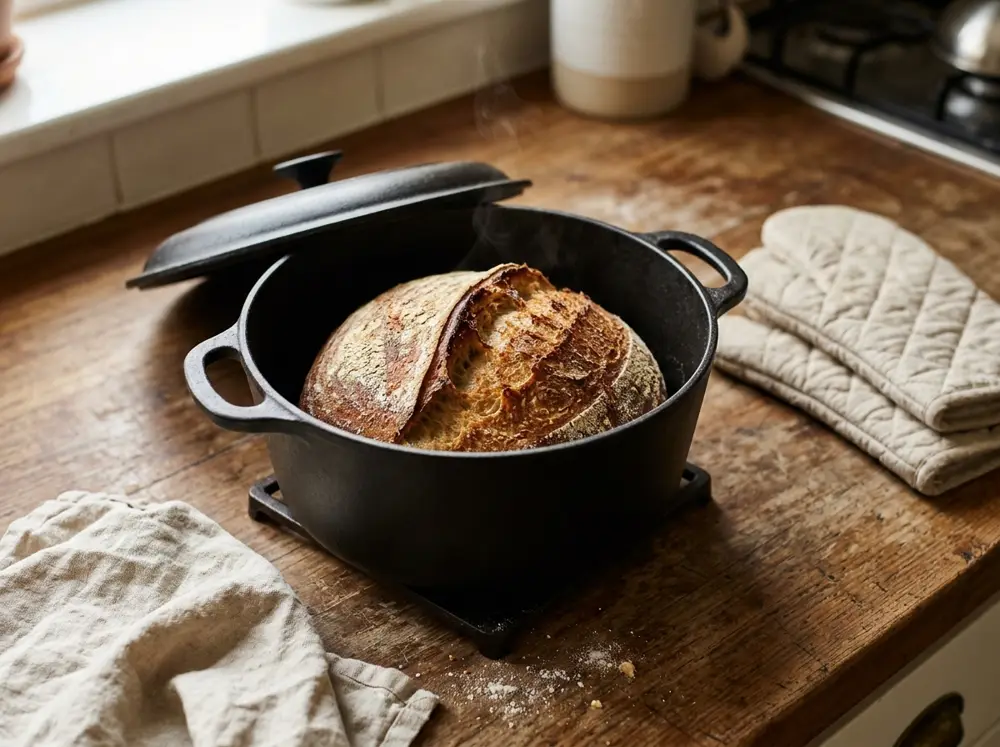
A baked loaf inside a cast-iron pot
Step 5Bake

Temperature, time and when to take it out.

Illustrative images.

Who this guide is for

This is for you if…

  • you’re just starting and want the basics without jargon;
  • you’ve tried and failed, and don’t know what went wrong;
  • your starter “died” around day 4;
  • you follow recipes but don’t understand the why of each step.

This is not for you if…

  • you’re a professional baker looking for advanced techniques.

What you get

Every step tells you what to do and why.

You don’t just follow the recipe. You understand what’s happening to the dough and know what to change next time.

A guide from zero to your first loafStarts with the starter. No experience needed.
A complete first-loaf recipeTwo versions: same day, or with a night in the fridge.
4 troubleshooting tables“What you see → why it happened → what to do → what to expect.”
8 quick-reference tablesTo print and keep in the kitchen.
Online calculator with 9 toolsDoes the math for water, starter, salt and temperature.

Never baked bread? Start with Day 1 of the starter. Already tried and it went wrong? Chapter 13 shows you what happened.

The guide, chapter by chapterIntroduction and 14 chapters, plus a quick-reference appendix.
  1. IntroBefore you start: the equipment guide
  2. 1Understanding the basics
  3. 2Flour
  4. 3Creating and understanding your starter
  5. 4Is your starter ready to bake?
  6. 5Mixing and developing the dough
  7. 6Bulk fermentation
  8. 7Flavor
  9. 8Add-ins and fillings
  10. 9Shaping and final proof
  11. 10Baking
  12. 11Crumb and texture
  13. 12Special situations
  14. 13Troubleshooting tables
  15. 14Your first sourdough loaf
  16. +Quick-reference appendix (8 tables, conversions and glossary)

See real pages from the guide

These are pages from the PDF, unedited. Swipe to see more.
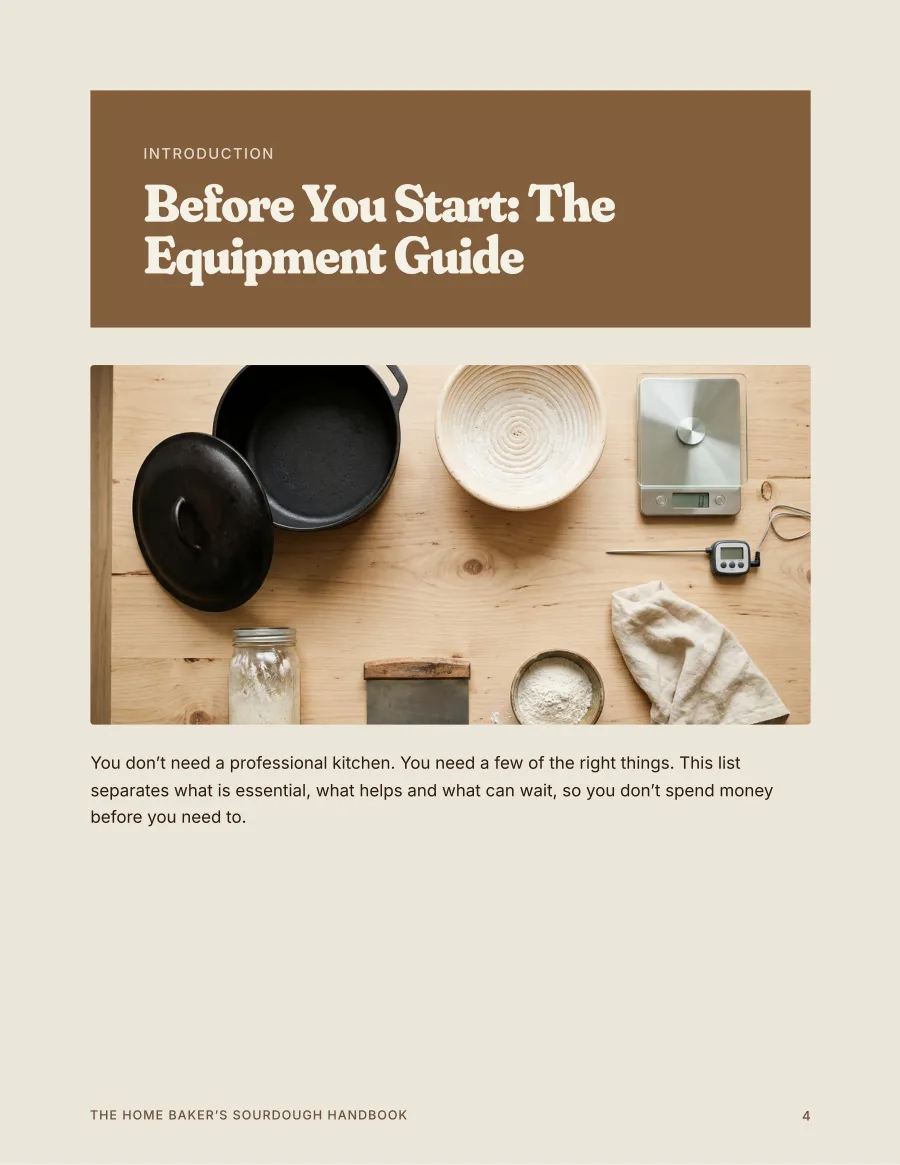
Guide page with the list of equipment to get started
Equipment to get started
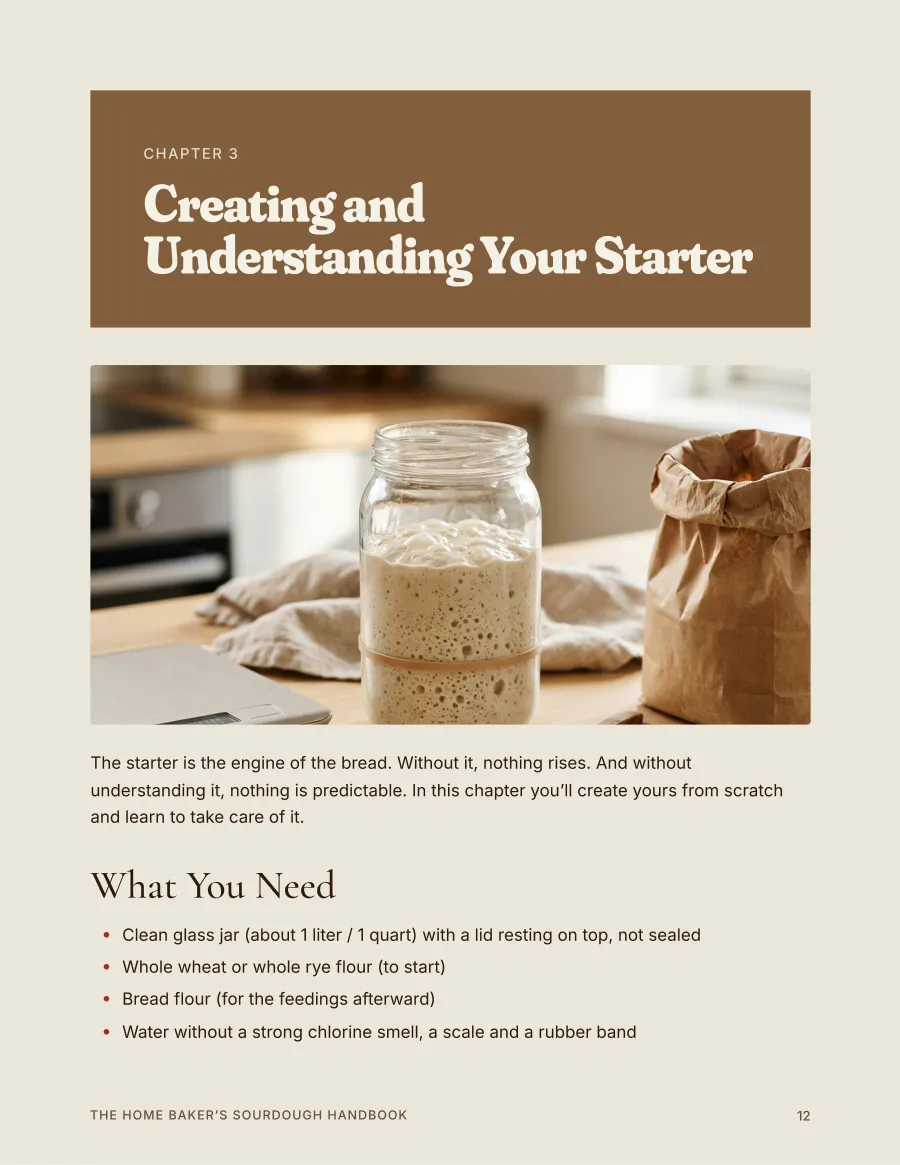
Page from the chapter on creating the starter, with the 7-day plan
Creating the starter
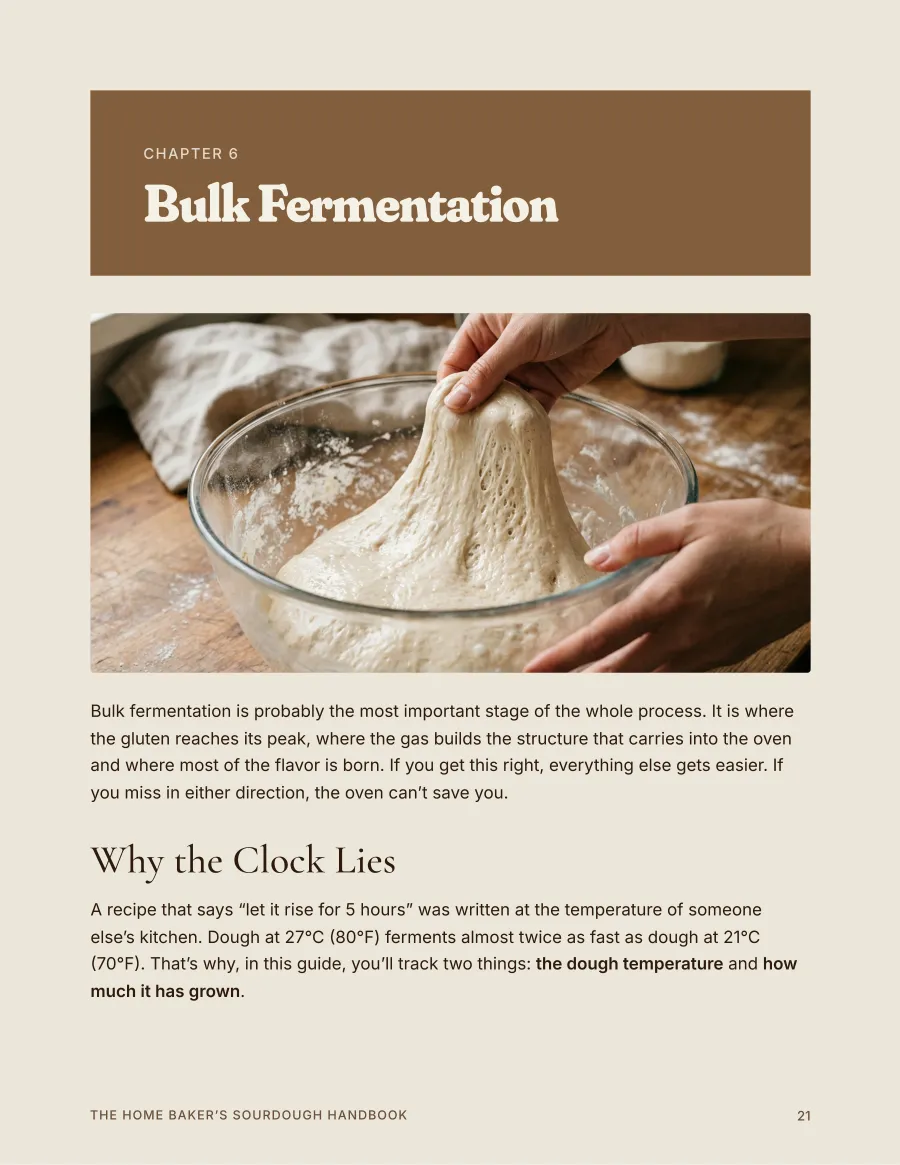
Opening of the bulk fermentation chapter, with hands folding the dough
Bulk fermentation
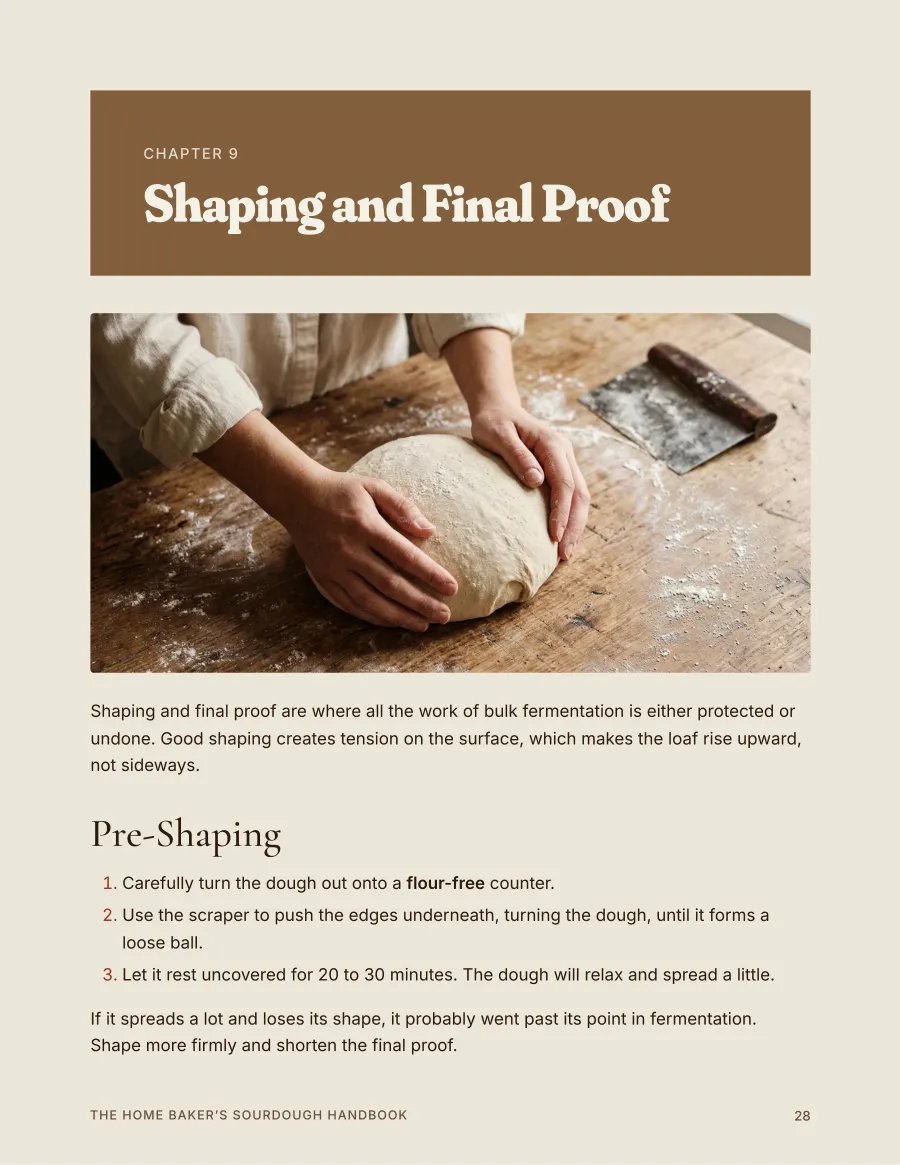
Opening of the shaping chapter, with hands shaping the dough
Shaping
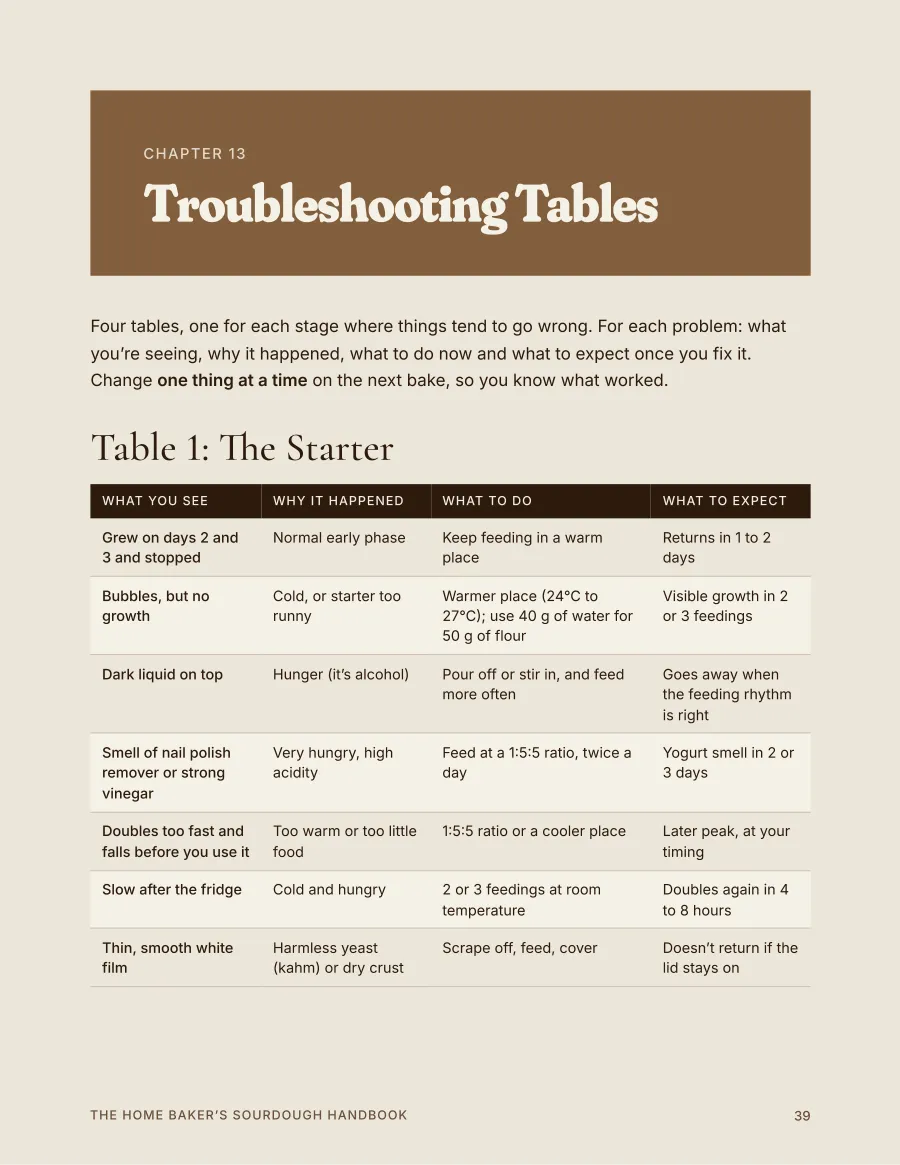
Starter troubleshooting table: what you see, why it happened, what to do
Troubleshooting table
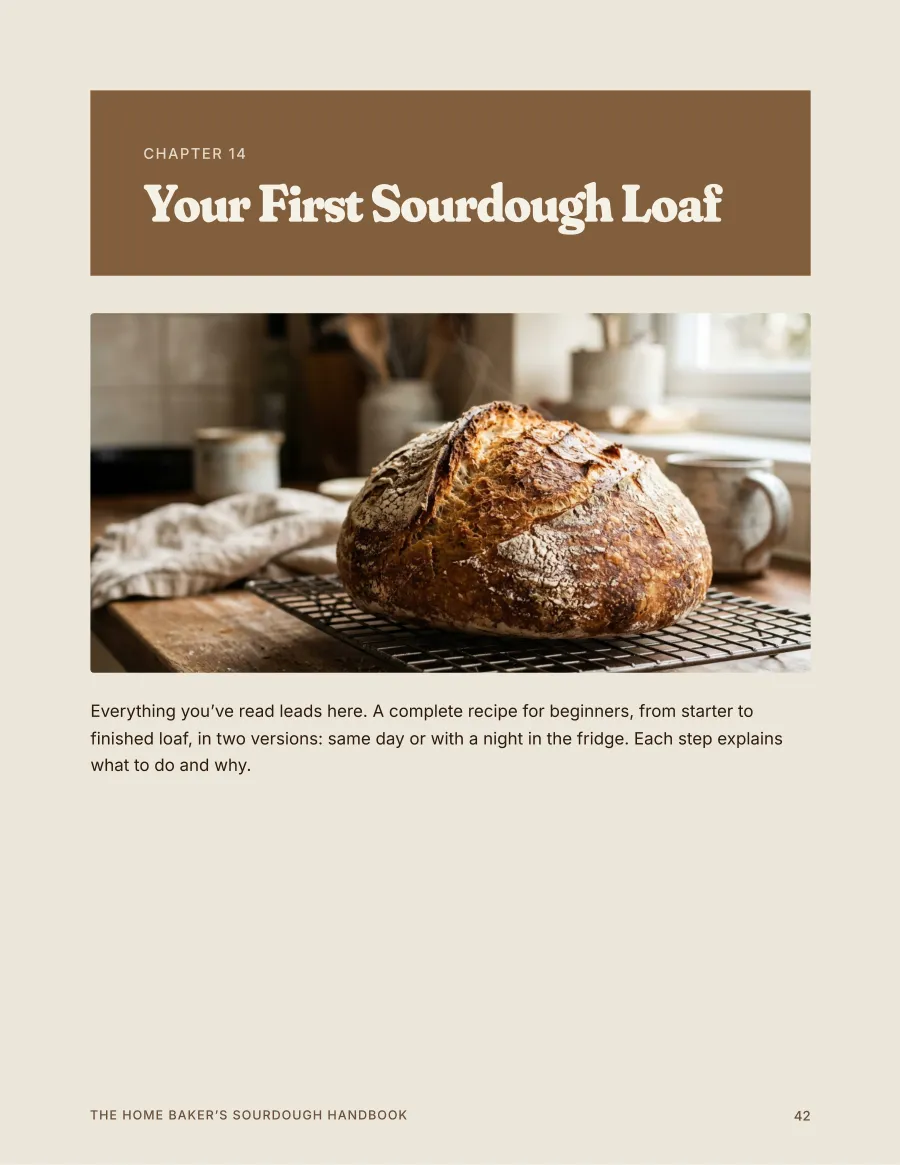
Opening of the first-loaf chapter, with the complete recipe
Your first loaf
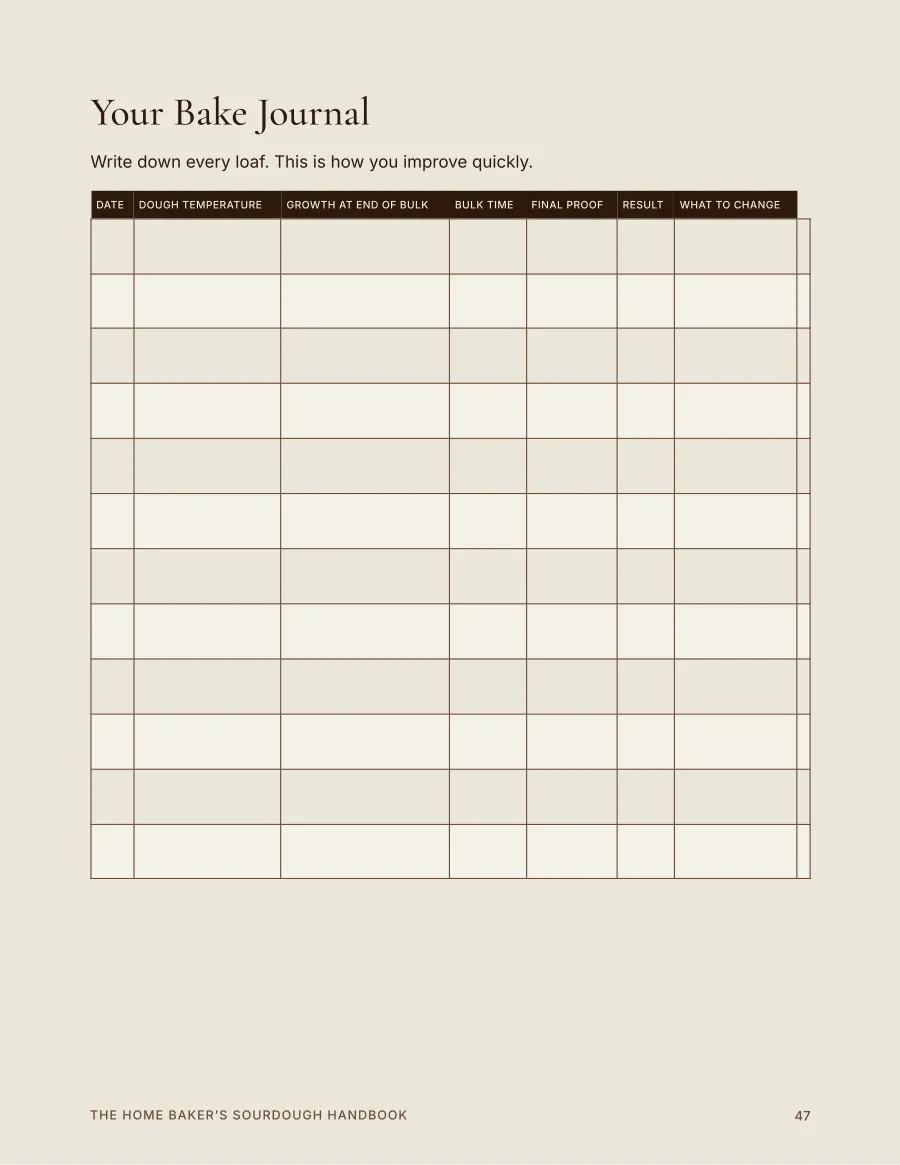
Printable bake journal page
Bake journal
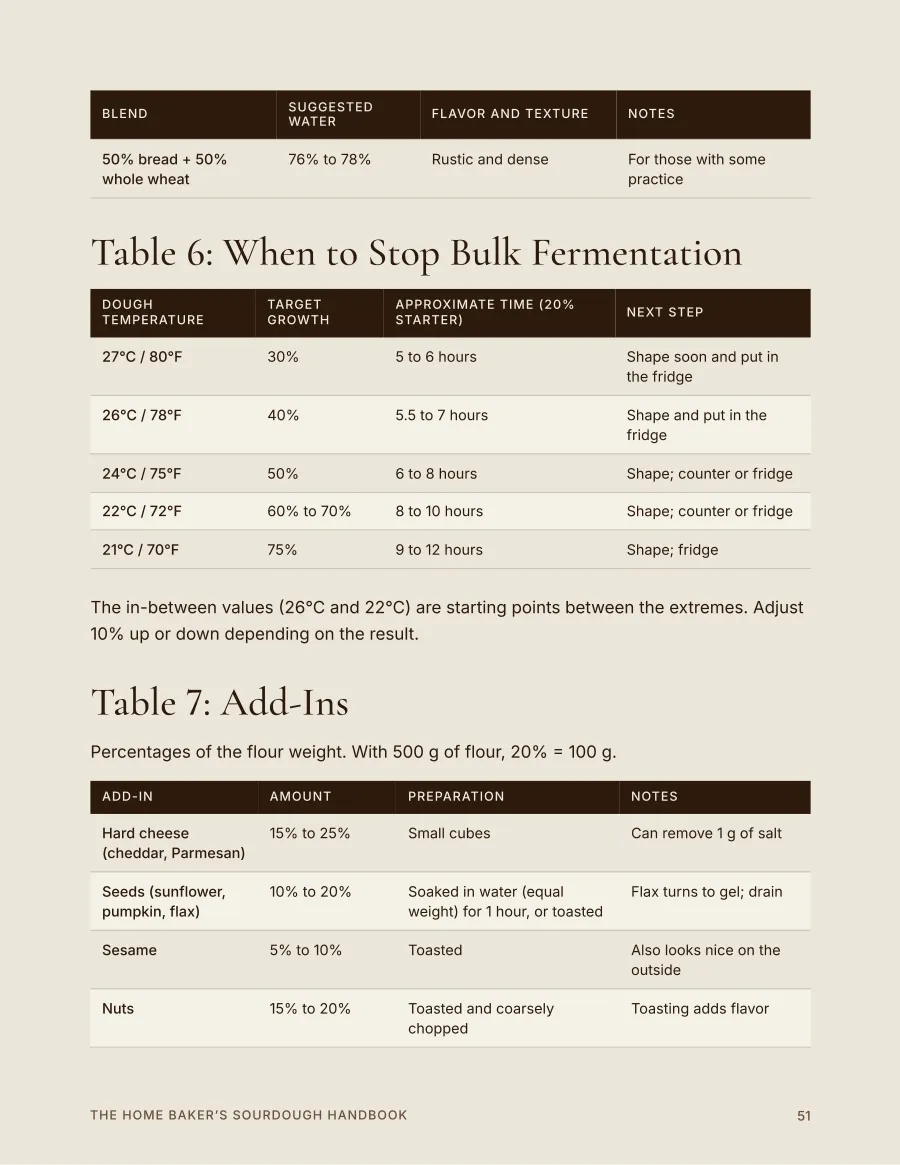
Quick-reference table: when to stop bulk fermentation
Quick reference

Included bonus

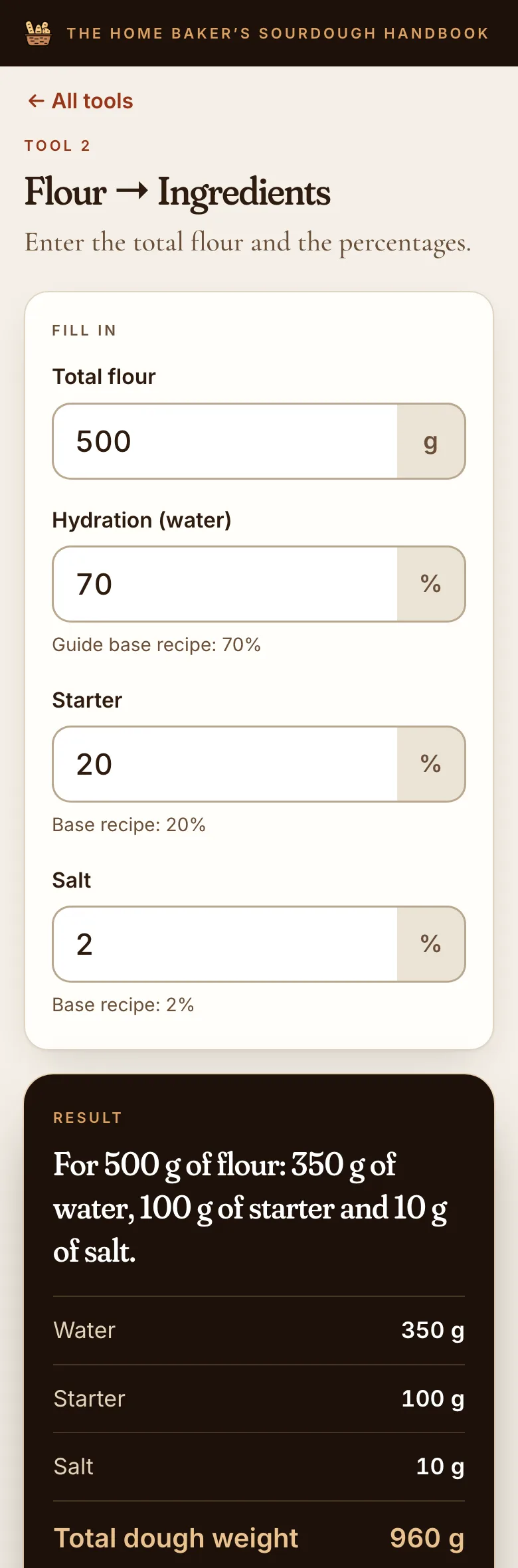
A calculator that does the math for you

Open it on your phone, in the kitchen. Type in your recipe numbers and instantly see how much of each ingredient to use. Works in your browser, nothing to install.
  • Flour blend
  • Flour → ingredients
  • Dough weight → flour
  • Real hydration
  • Starter feeding
  • Scale a recipe
  • Hydration adjustment
  • Water temperature
  • Dough weight and basket size
Calculator screen on a phone, showing the result for flour, water, starter and salt

Start today with your starter

The Home Baker’s Sourdough Handbook

$9.90

One-time payment, no subscription

  • PDF guide with 55 pages, in English
  • 14 chapters, from starter to first loaf
  • 4 troubleshooting tables
  • 8 quick-reference tables
  • Online calculator with 9 tools
I want to learn now

Instant delivery to your email.

7days

7-day guarantee

If it’s not for you, send us an email and we’ll refund your money.
Frequently asked questions

Is it a physical book?

No. It’s a digital PDF plus an online calculator, sent by email right after purchase.

What language is it in?

The guide and the calculator are in English.

Can I read it on my phone?

Yes. The PDF works on phones, tablets and computers. The online calculator works in the browser of your phone, tablet or computer, with nothing to install.

Do I need expensive equipment?

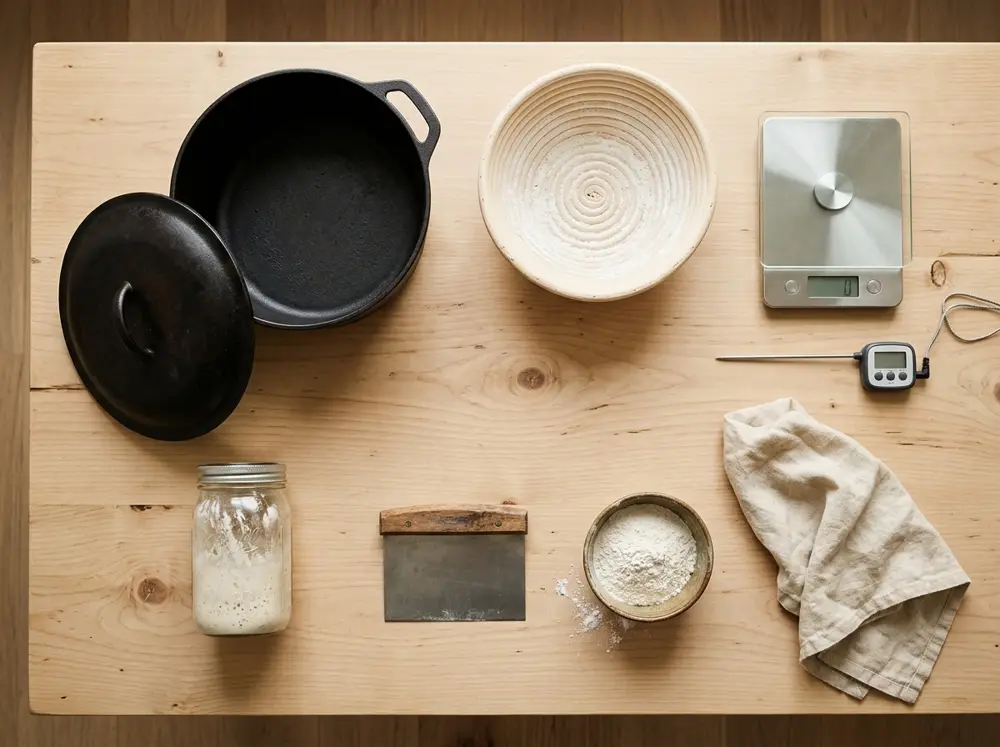
No. A digital scale, a thermometer and a glass jar. A cast-iron pot is recommended but not required.

I’ve never baked bread. Is it for me?

Yes. The guide starts from zero, including creating the starter.

I already bake, but it goes wrong. Is it for me?

Yes. Chapter 13 has 4 diagnostic tables: you see what happened to the dough and find out why and what to do.

What units does it use?

Grams, with temperatures in °F and °C.

What if I don’t like it?

You have a 7-day guarantee. Send us an email and we’ll refund your money.

Your first loaf starts with the starter

Every step tells you what to do and why. And if something comes out different than expected, you know where to look.

I want to learn now